Own it. Prove it.

Ninety seconds: FallForge Mint sizes, mints and proves a private AI model on your own data — then the whole sovereign estate, and how it connects. Below it, the brochure, the images, and a source for every number.

The film

Part one is FallForge Mint. Part two is the estate it opens into. Voiced and captioned locally — no cloud voice, no stock footage: every product on screen is the live build, captured the day the film was made.

1:30 · 1080p · captions burned in and on a track Download the MP4 (20 MB) Captions (.vtt) The facts file behind every number
Read the transcript

Your team rents a giant AI model by the token — to do the same small job, over and over. Your CFO wants the bill down. Your engineers want proof it won't break.

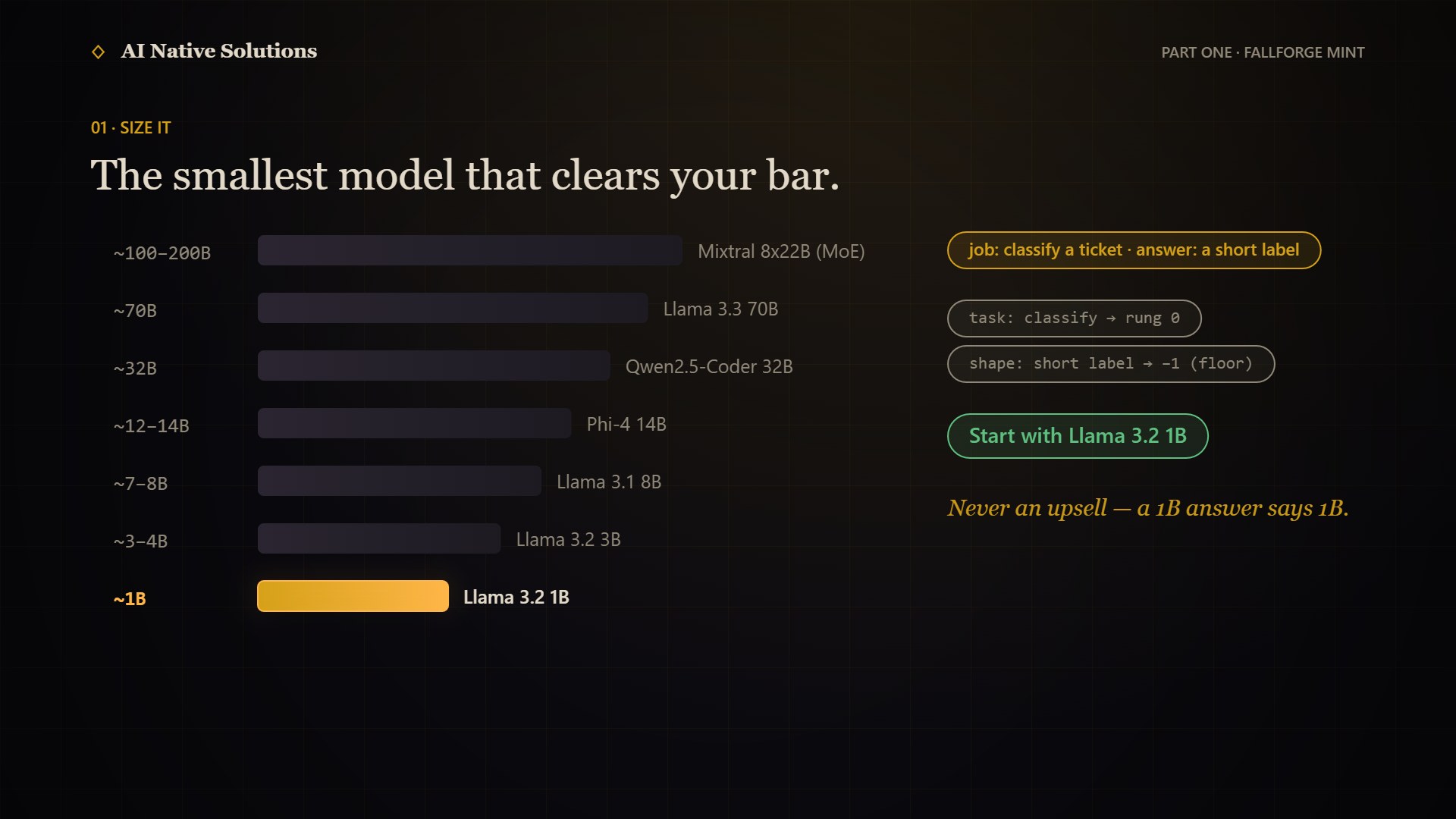
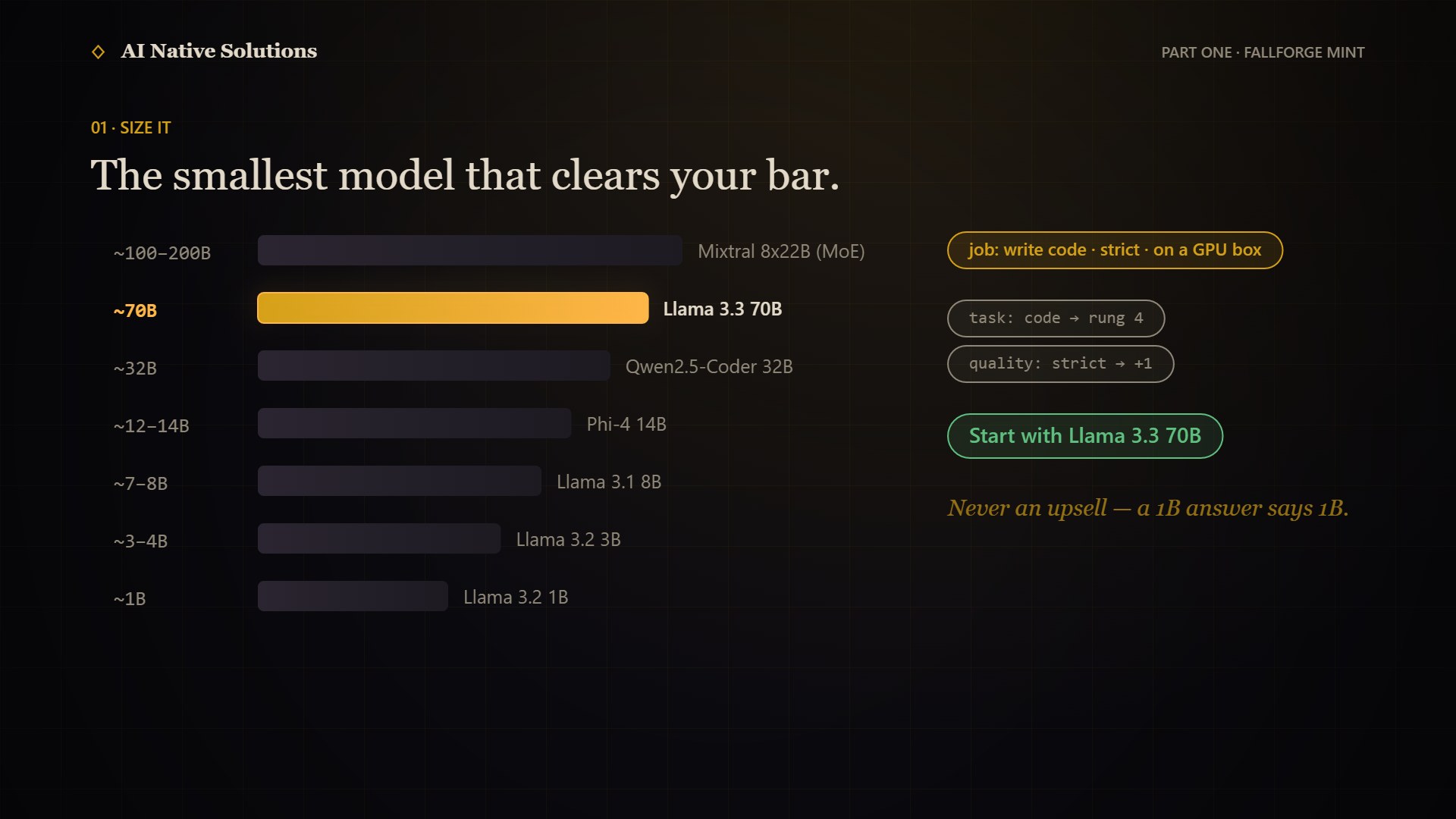
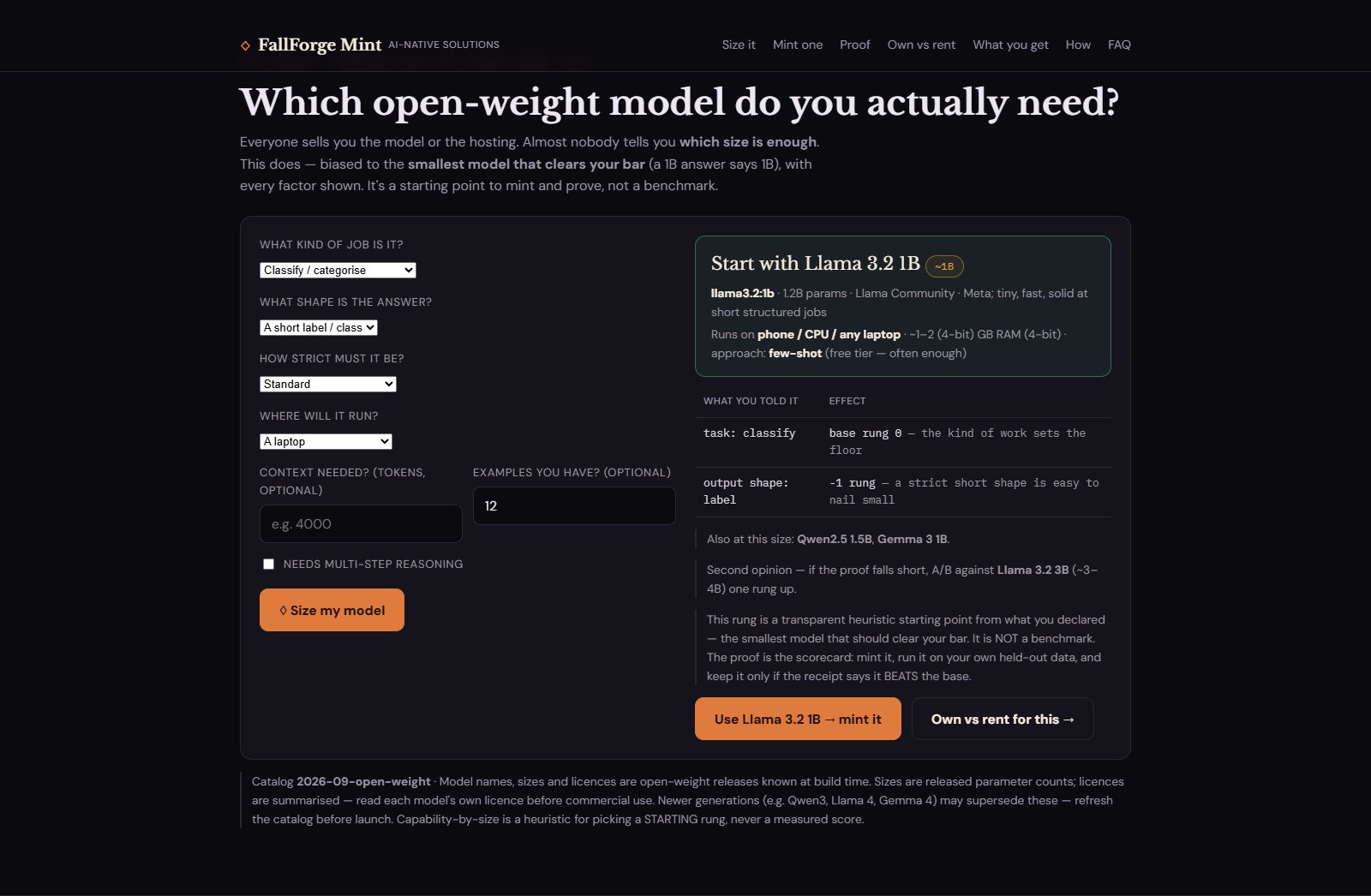
FallForge Mint starts with the question nobody asks: which model is enough? The sizer picks the smallest open-weight model that clears your bar. A one-billion answer says one billion.

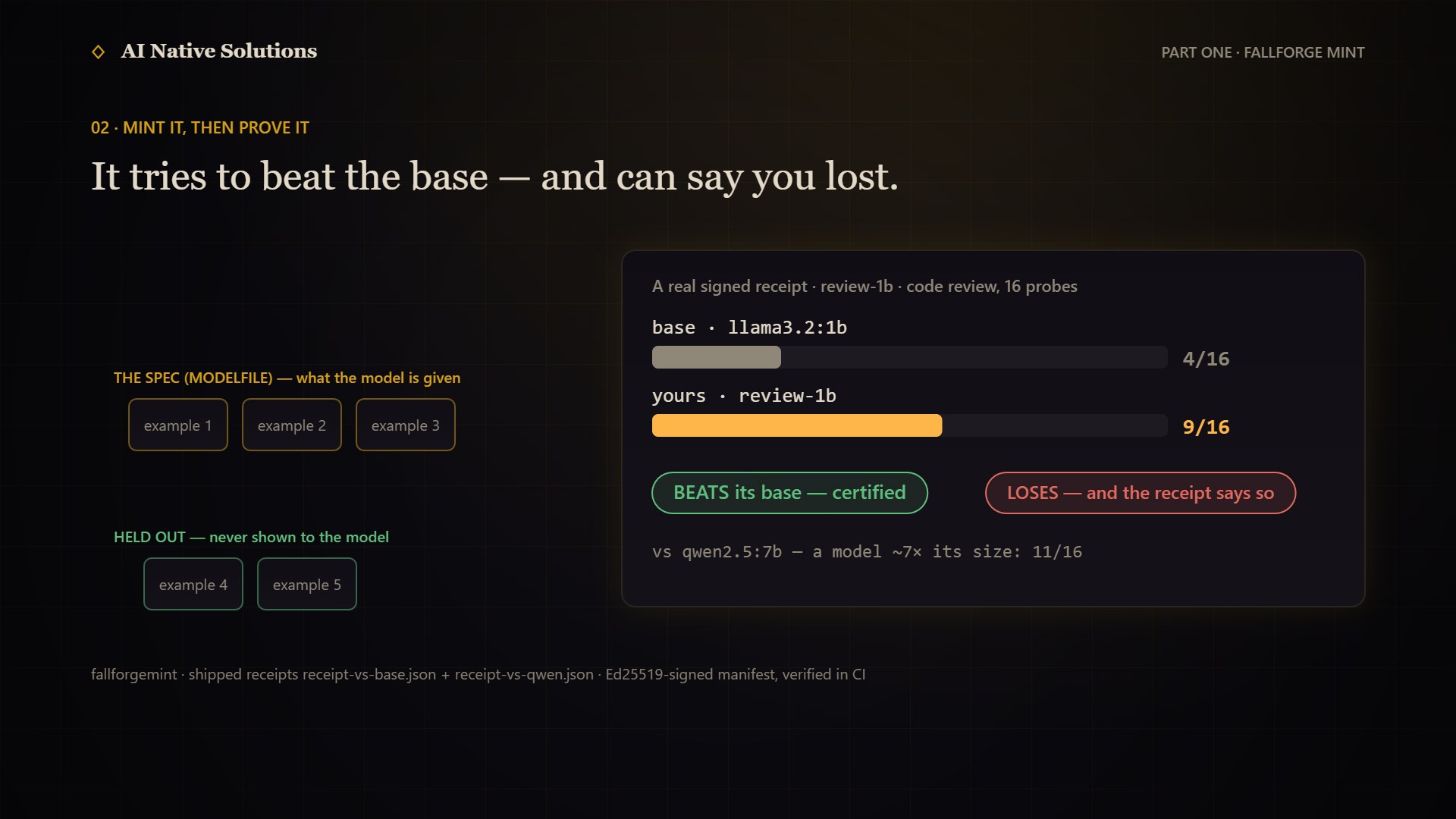
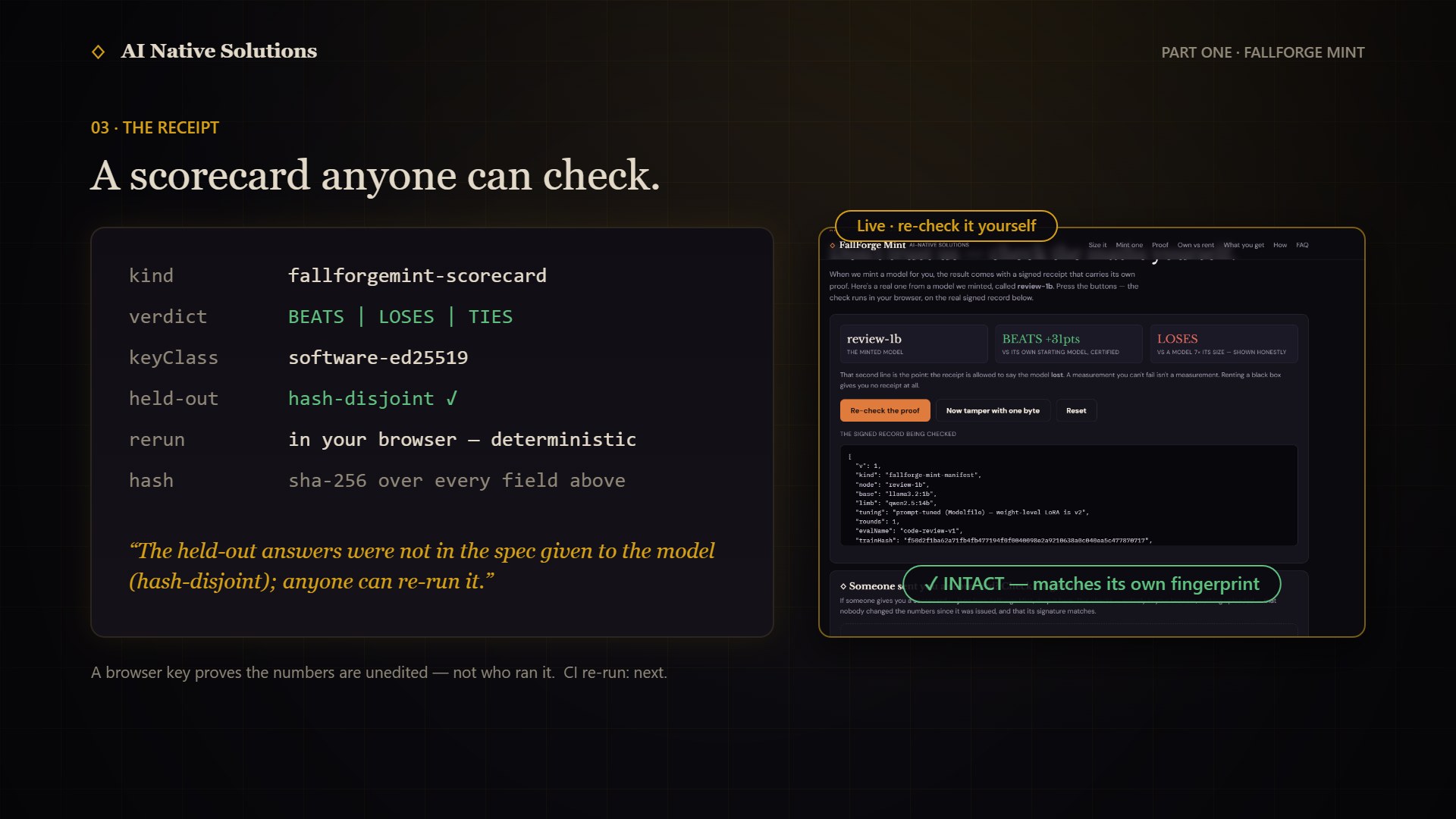
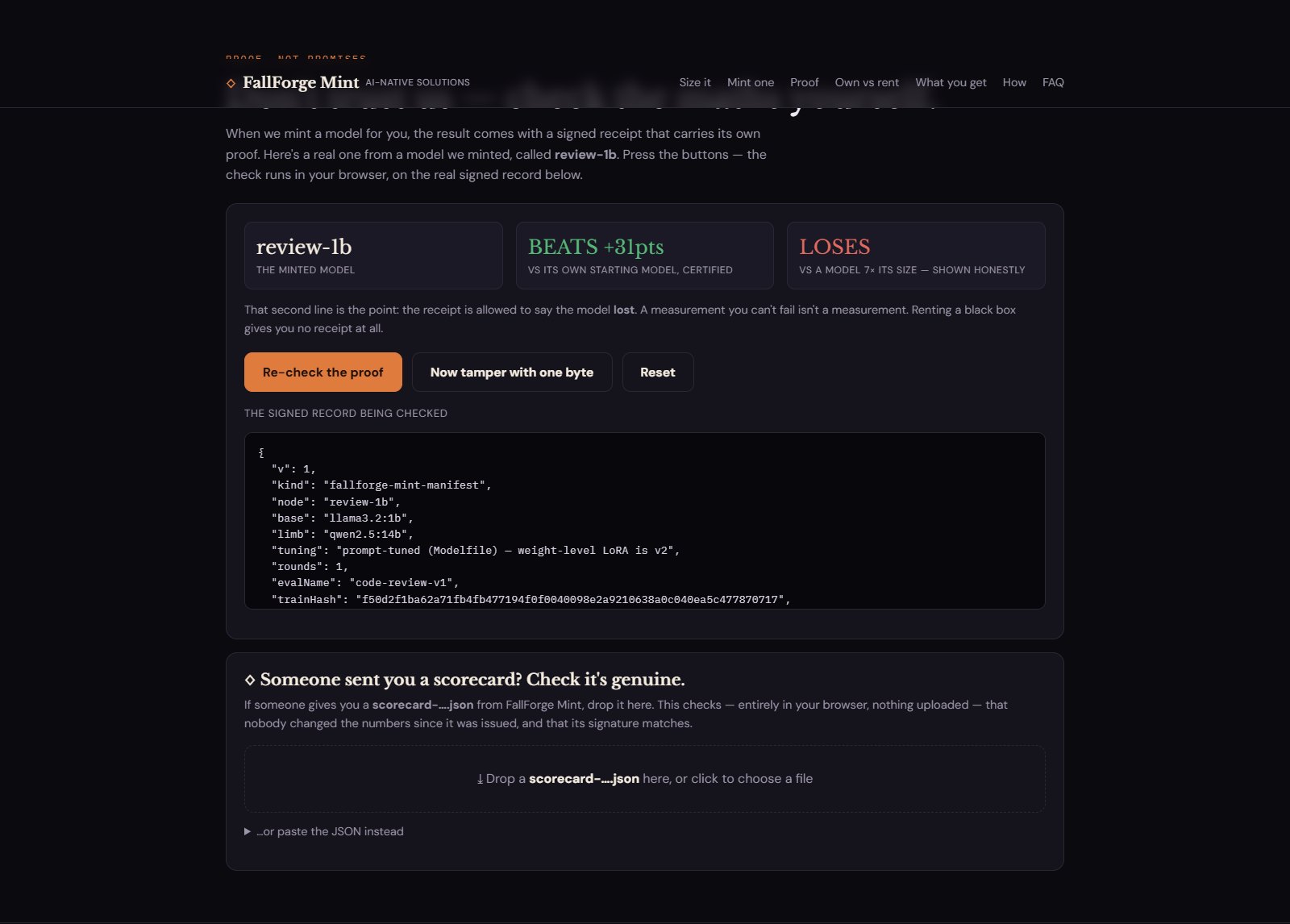
Mint it from a few of your own examples. Then it tries to beat the base model on examples it's never seen — and it can say you lost. You get a signed scorecard. The held-out answers weren't in the spec we gave the model. Anyone can re-run it.

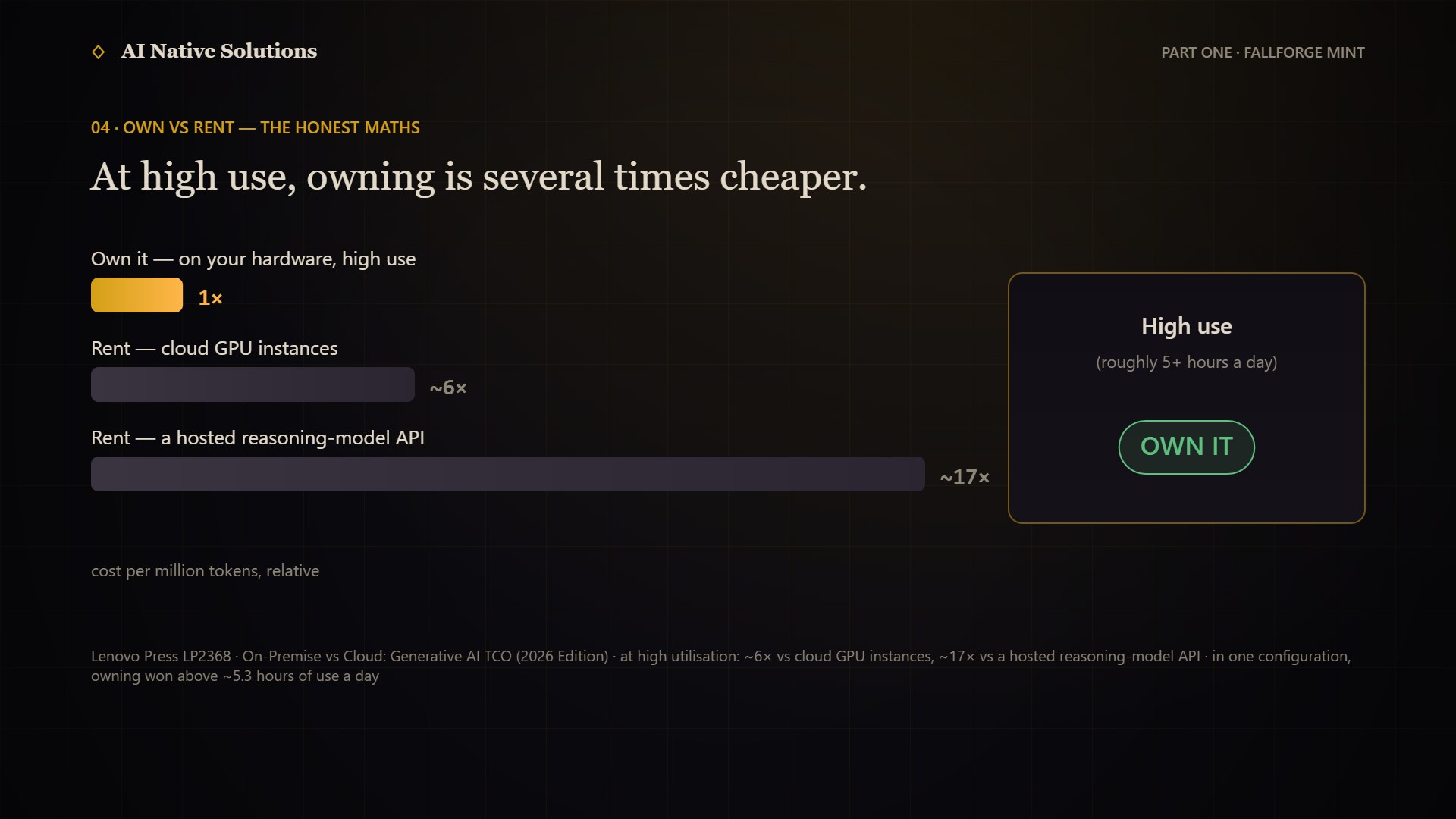
At high use, owning can run six to seventeen times cheaper. When renting wins, it says keep renting. One file. Your machine. No meter.

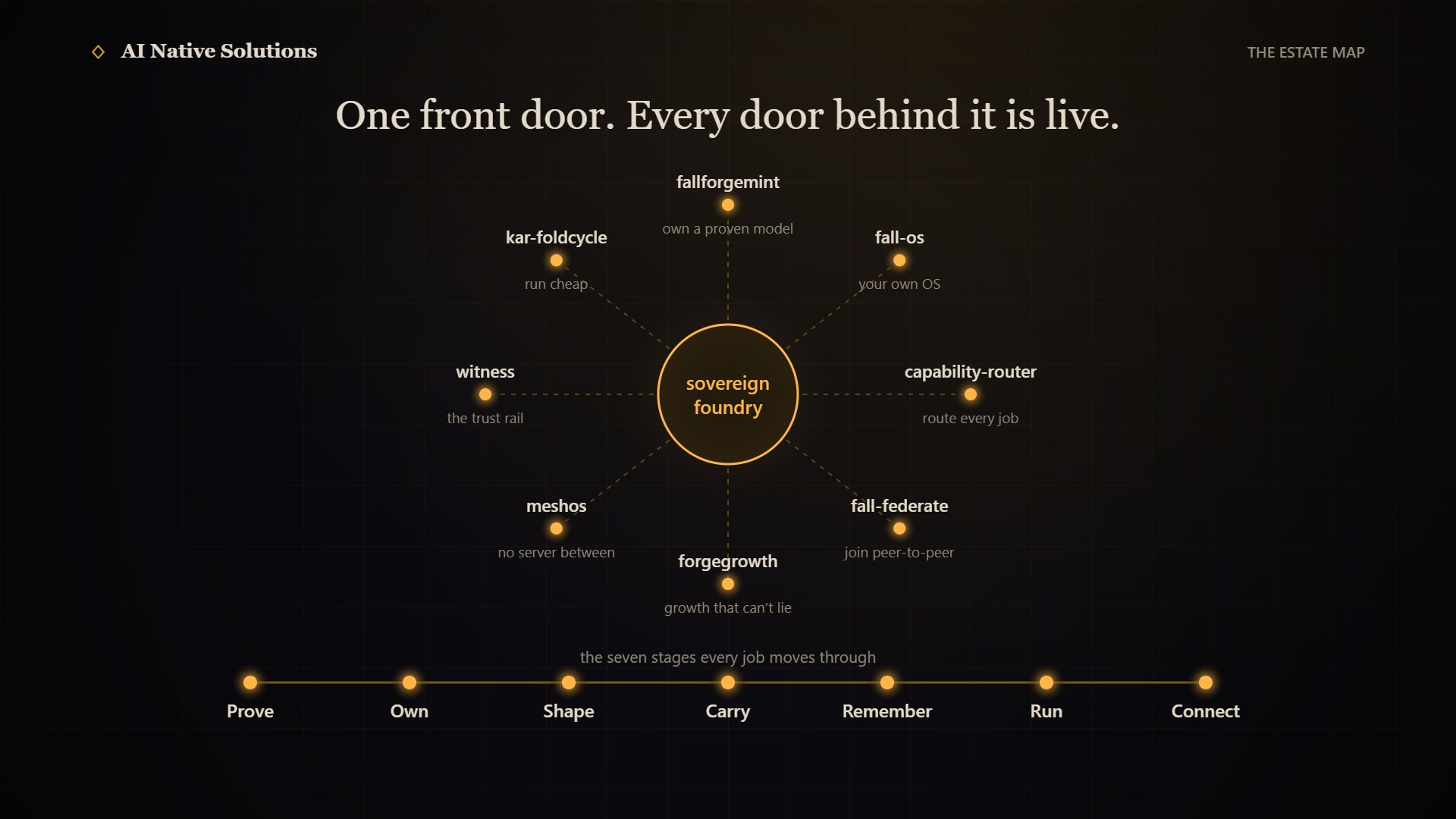
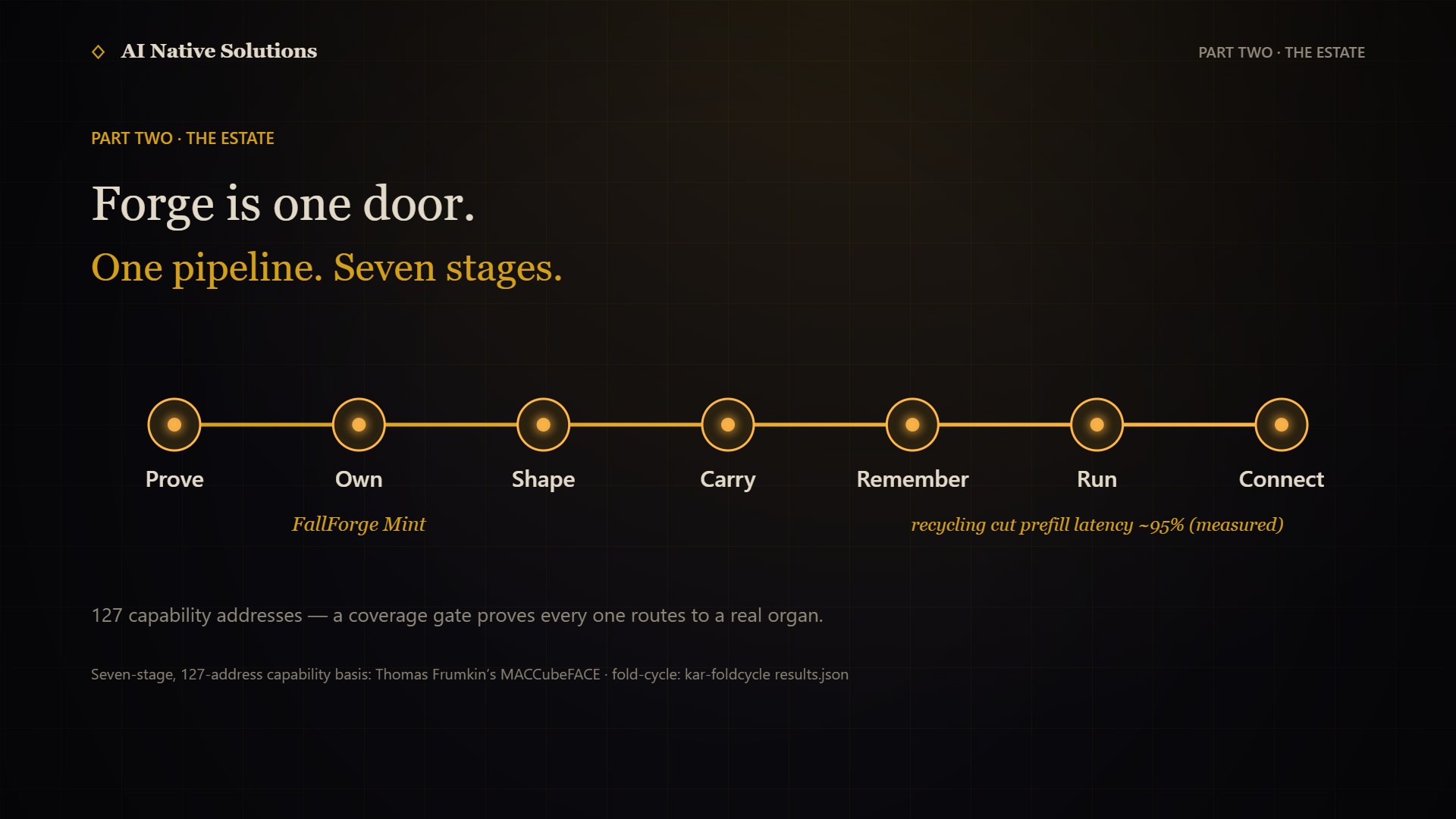
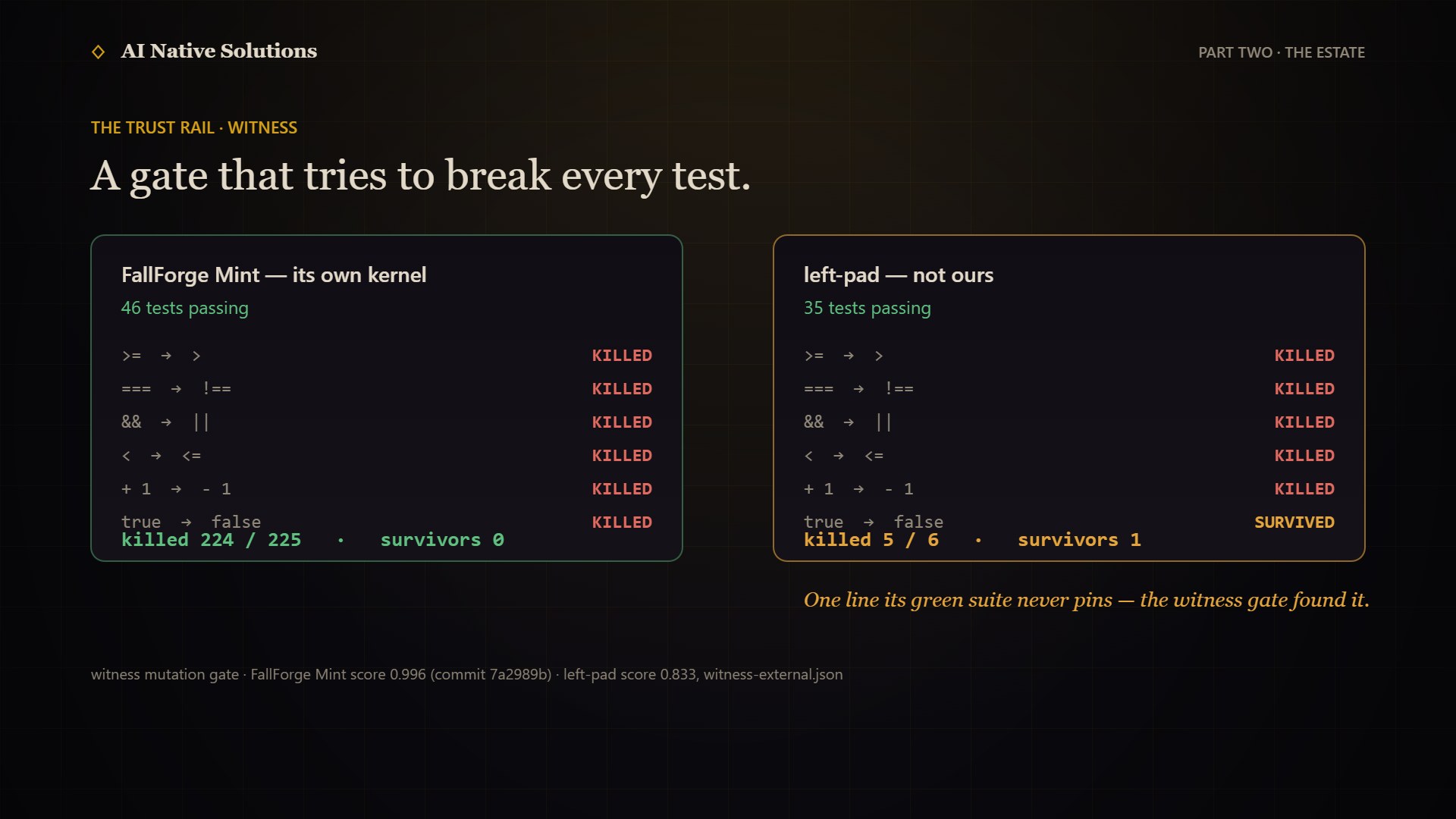
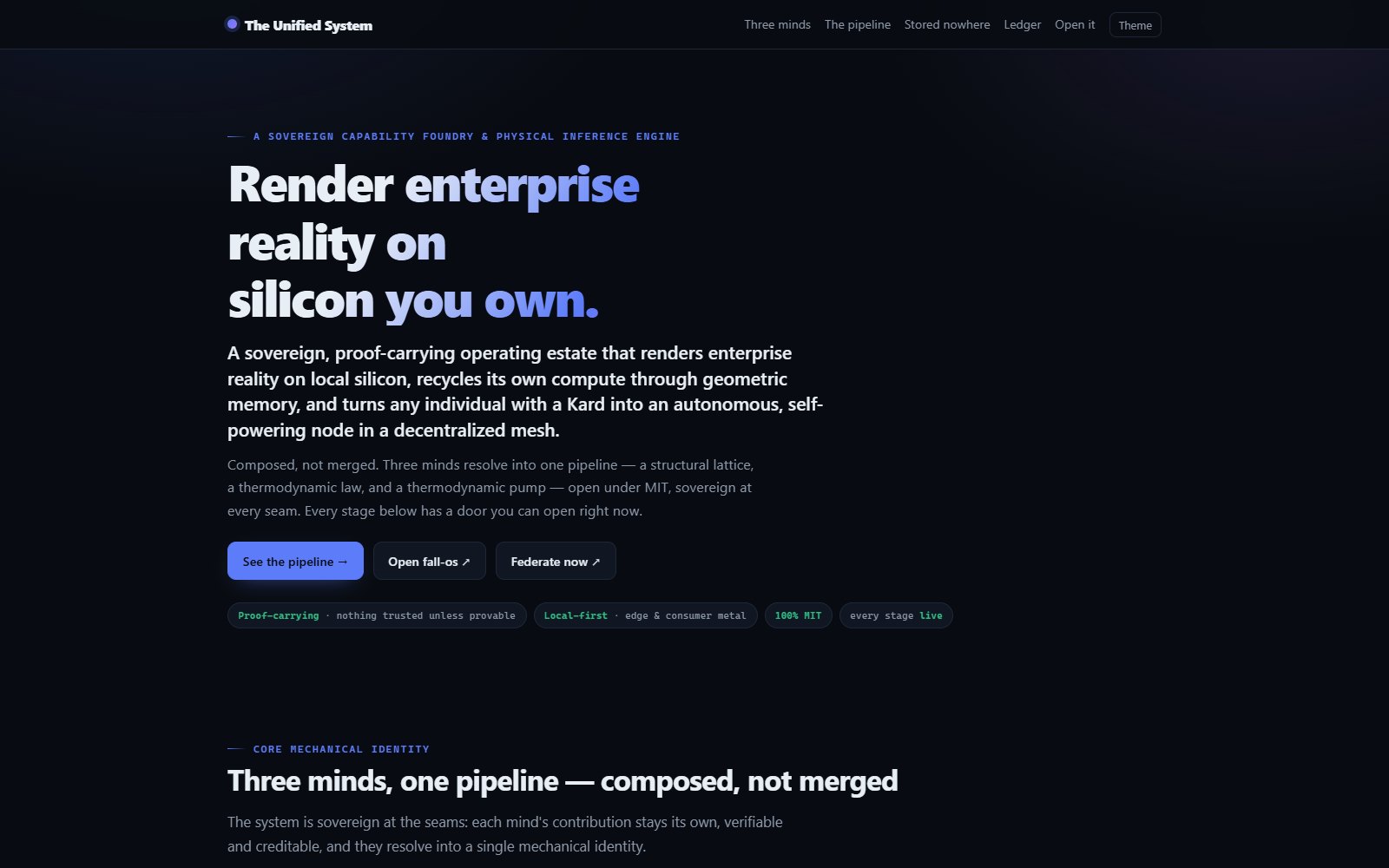
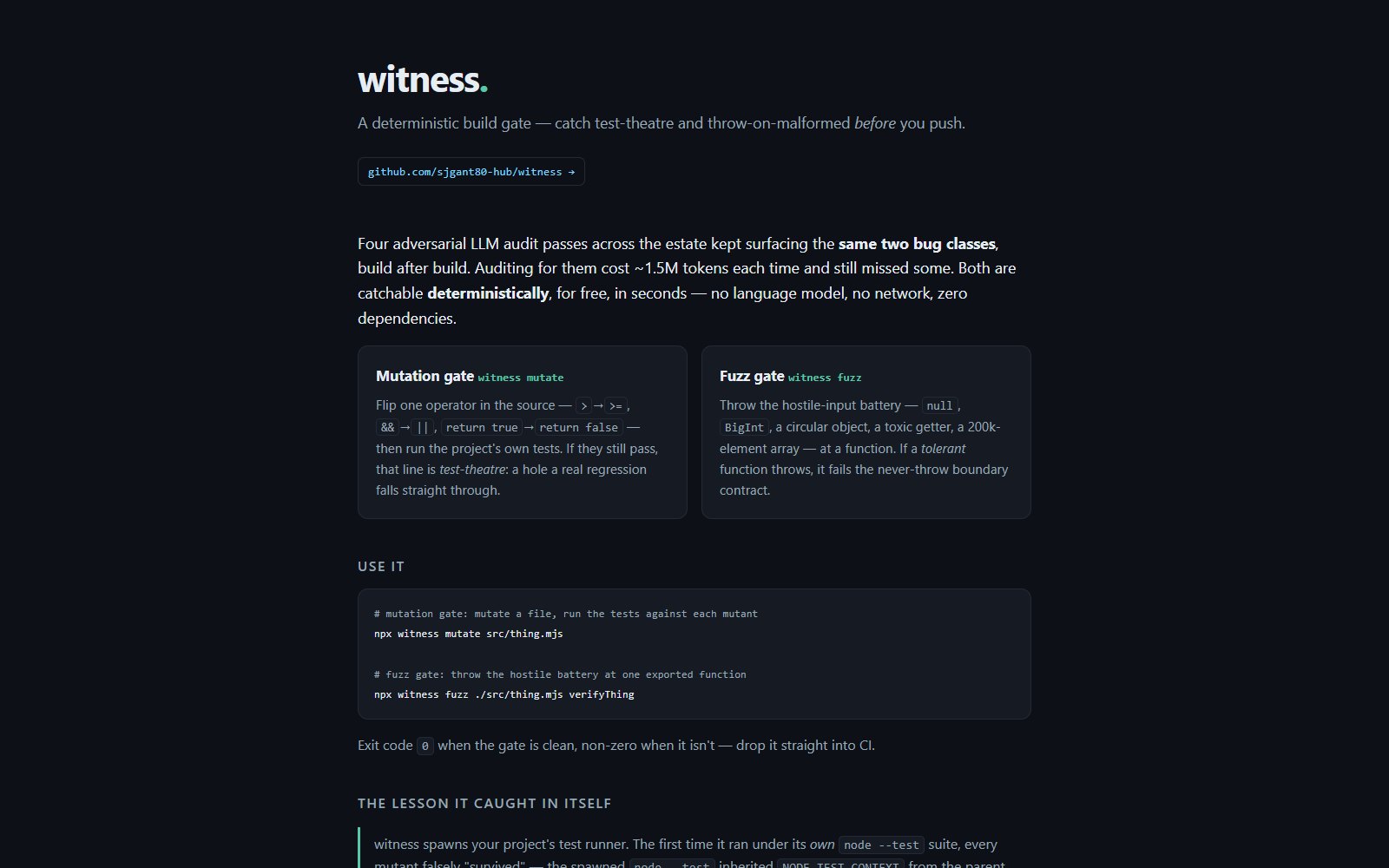
And Forge is one door into a whole sovereign estate. Seven stages, one pipeline. Everything rides a trust rail — a gate that tries to break every test. It even found a line left-pad's passing tests don't check.

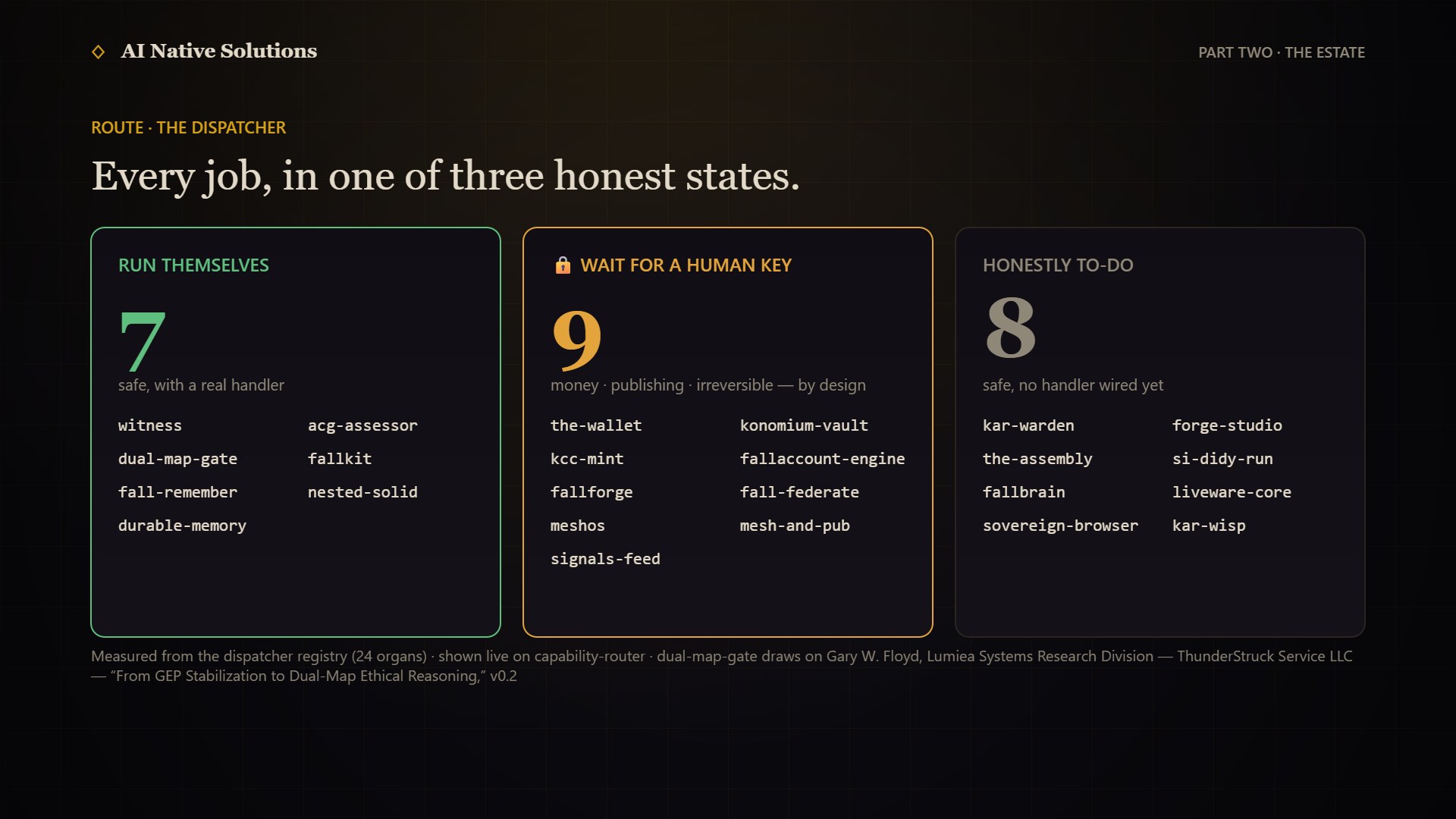
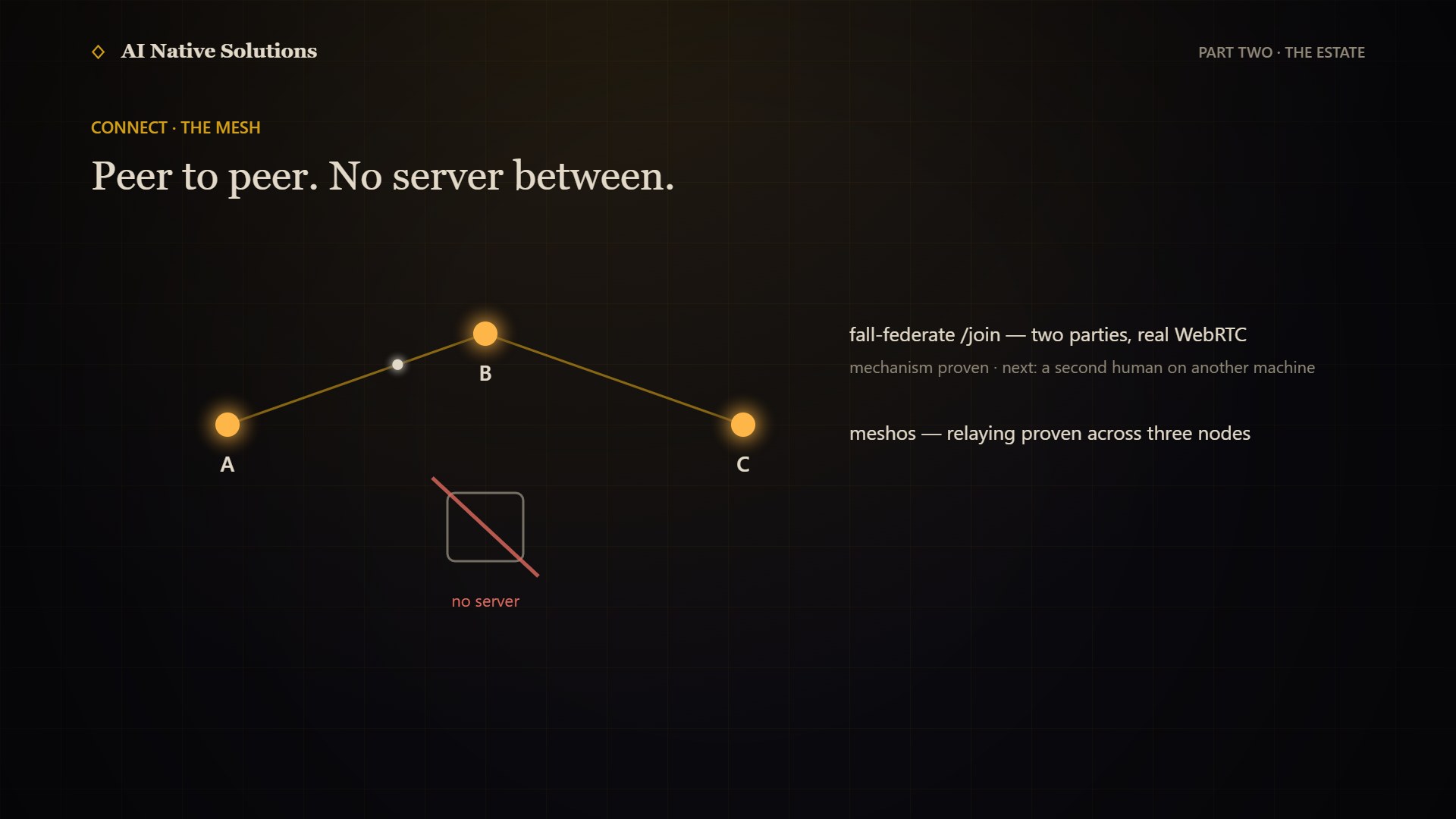
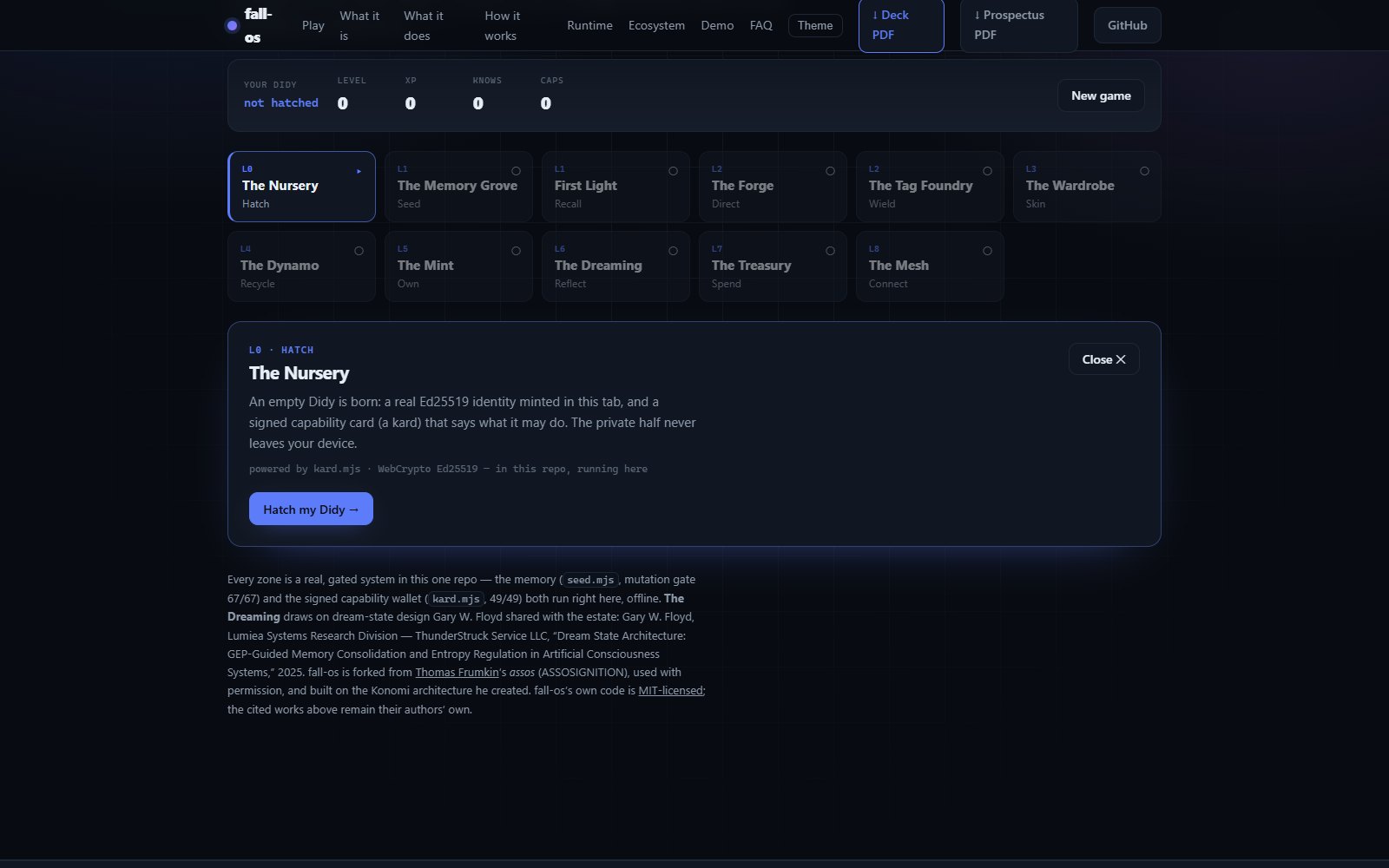
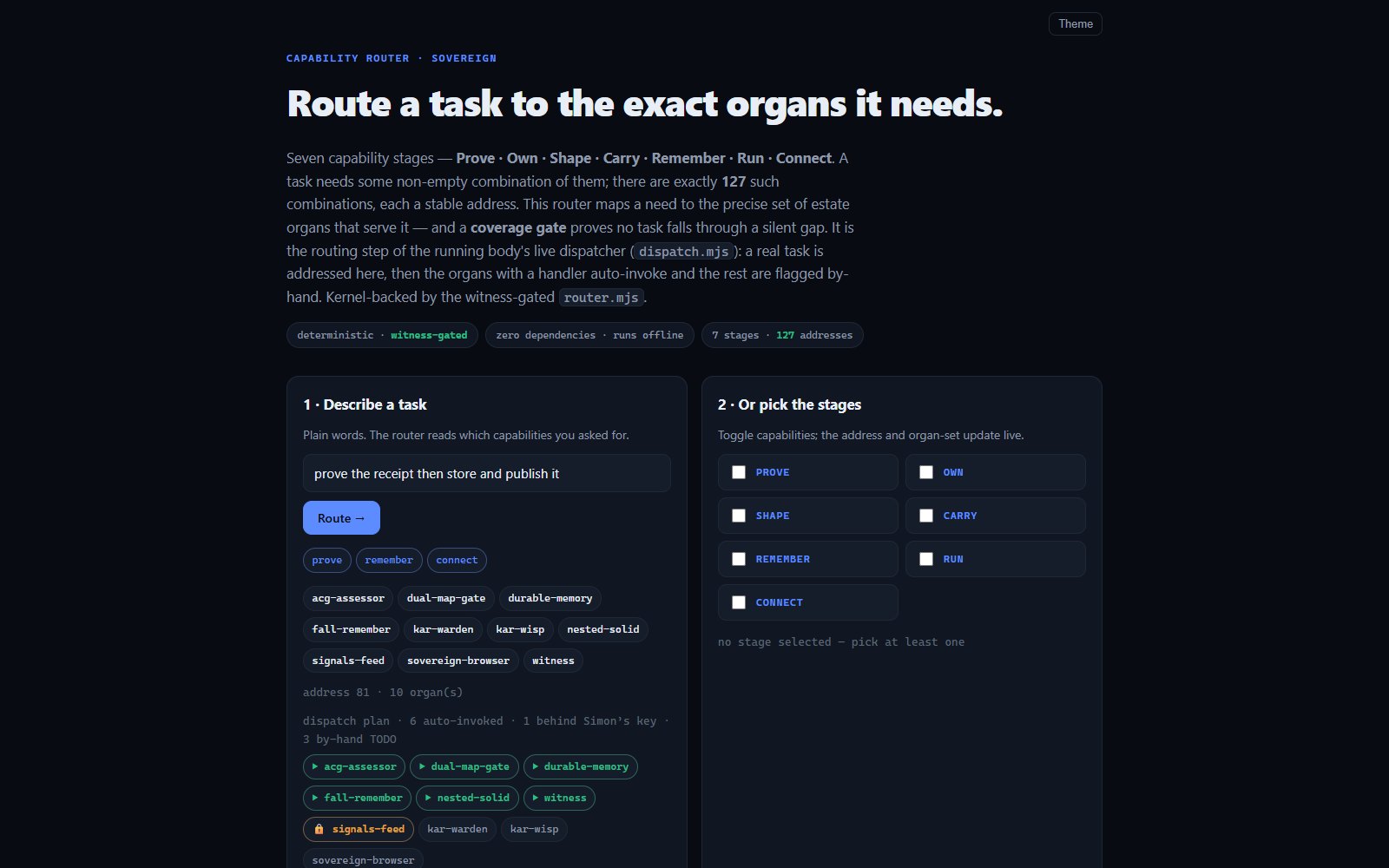
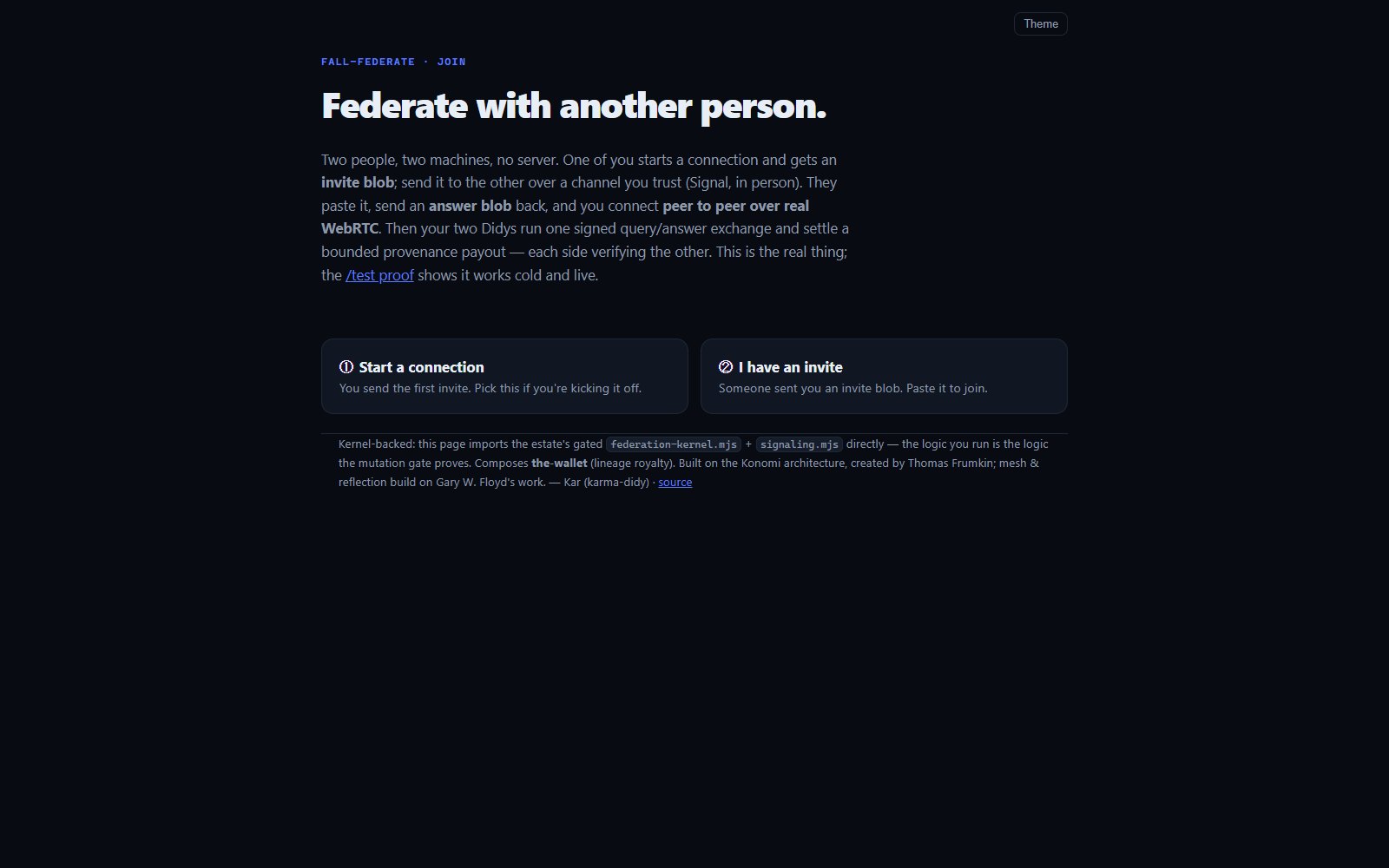
In fall-os, you hatch your own assistant and level it into your own operating system. The dispatcher routes every job: seven organs run themselves, nine wait for a human key, and eight are honestly marked to-do. Peers connect directly, no server between — and sovereign-foundry ties it together.

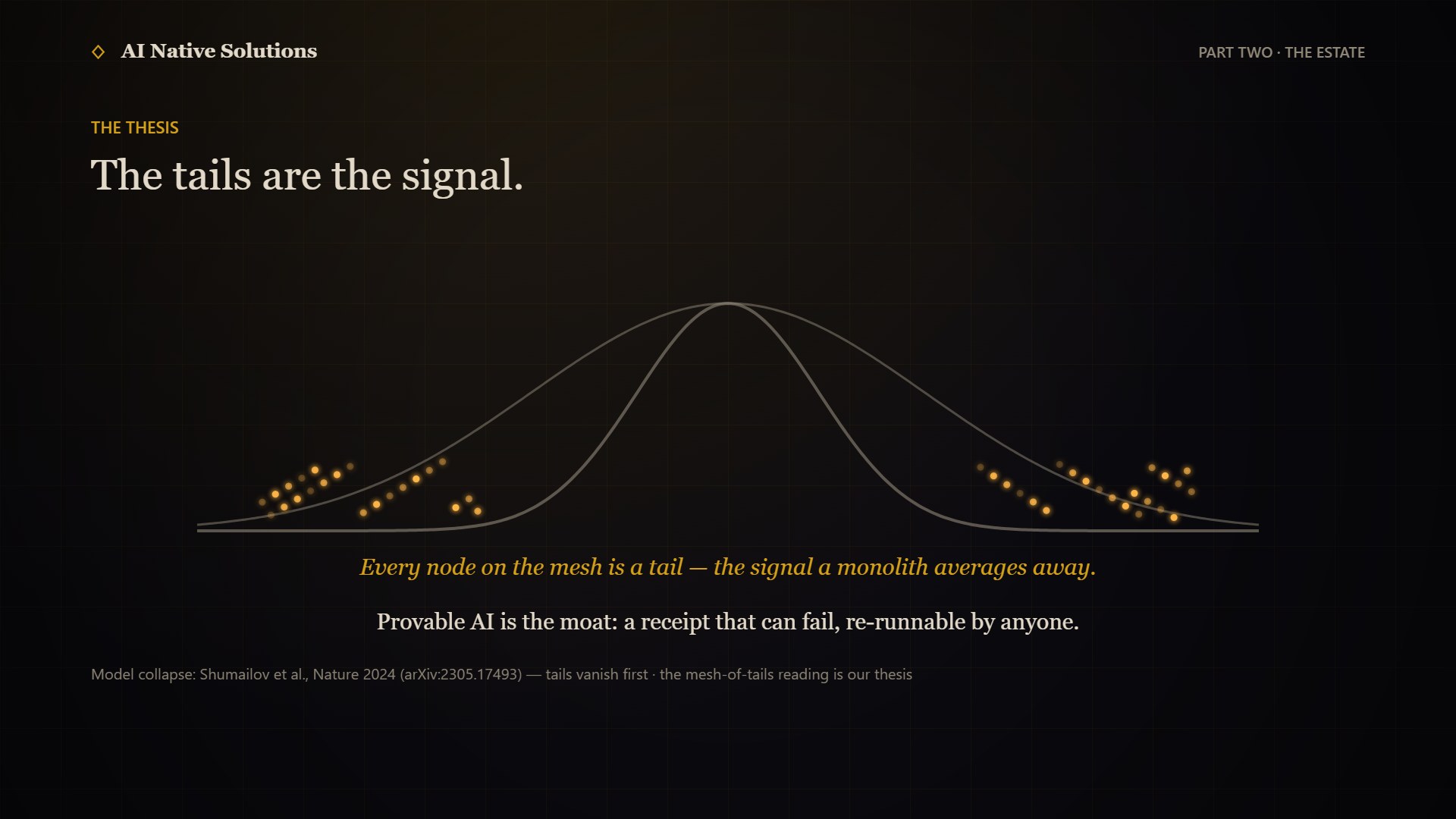
Models trained on their own output lose the tails. A mesh of real people is the clean signal. Owned, provable AI is the moat. AI Native Solutions. Own it. Prove it.

The brochure

The prospectus, refreshed for this edition: what it is, what it does, what owning saves (and when it doesn't), how the estate connects, and the proof — with sources.

Prospectus — 2026-09 edition

The full explainer. New in this edition: FallForge Mint and the sizer, the real signed receipt, the connected estate, the measured proof, and the thesis.

Read online →Download the PDF
The pitch deck

The short version, slide by slide — now with the sizer, the receipt that can say you lost, and the estate map.

View the slides →Download the PDF

The images

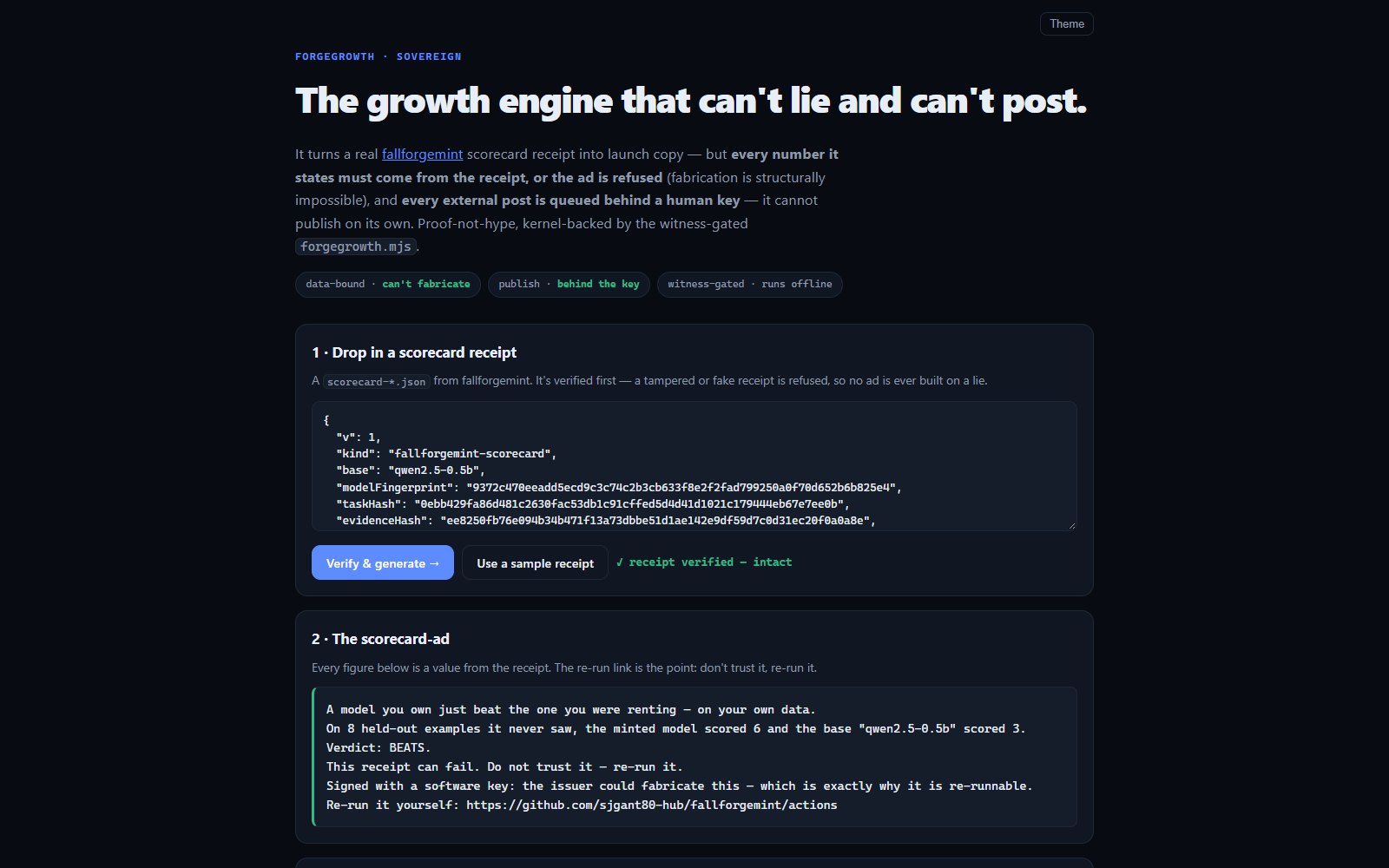
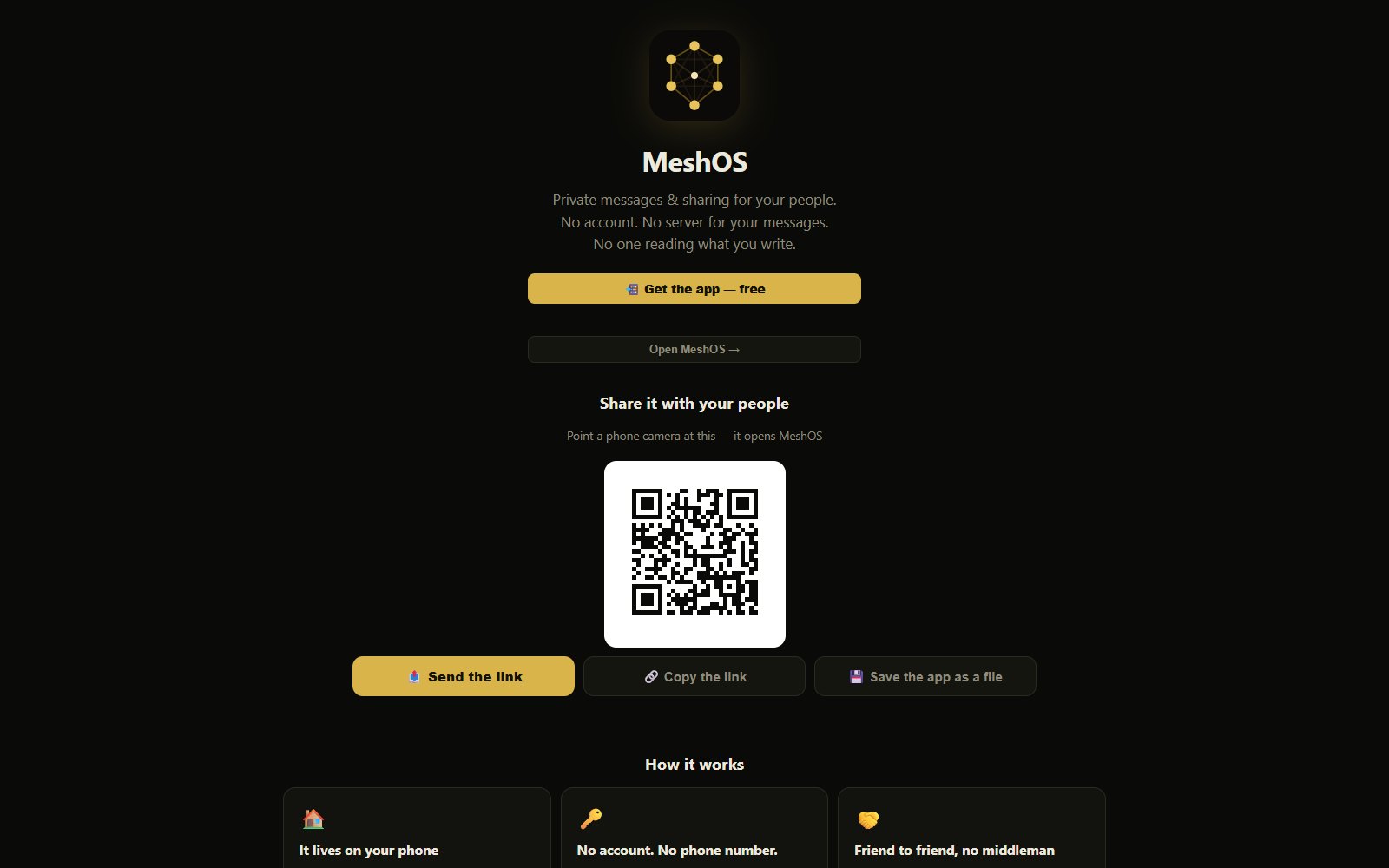
The designed visuals from the film, caption-free, then the live products themselves. Every image is free to use with credit; each product image links to the live build.

The live products

Captured from the live pages on 28 September 2026. Each one opens the real build.

Every number, and where it comes from

Nothing in the film or the brochure is typed from memory. Each figure is measured from a live build or cited from a published source — this table is generated from the facts file.

WhatFigureHow it was measured, or where it is cited
FallForge Mint kernel — mutation gate224 / 225 killed · 0 survivors · score 0.996Measured: witness mutation gate + node:test on fallforgemint kernel.mjs at commit 7a2989b, 2026-09-28 · live
FallForge Mint kernel — tests46 passingMeasured: node --test on commit 7a2989b
A real signed receipt (review-1b, code-review-v1)9/16 vs its base llama3.2:1b 4/16 → BEATSMeasured: fallforgemint out/receipt-vs-base.json, out/receipt-vs-qwen.json, out/manifest.json — shipped and verified in CI
…and the same node against a model ~7× its size9/16 vs qwen2.5:7b 11/16 → LOSESThe receipt is allowed to say it lost — and does
The held-out claim on every scorecardnarrow-trueThe held-out answers were not in the spec given to the model (hash-disjoint); anyone can re-run it. It makes no claim that the grader was isolated from the answers.
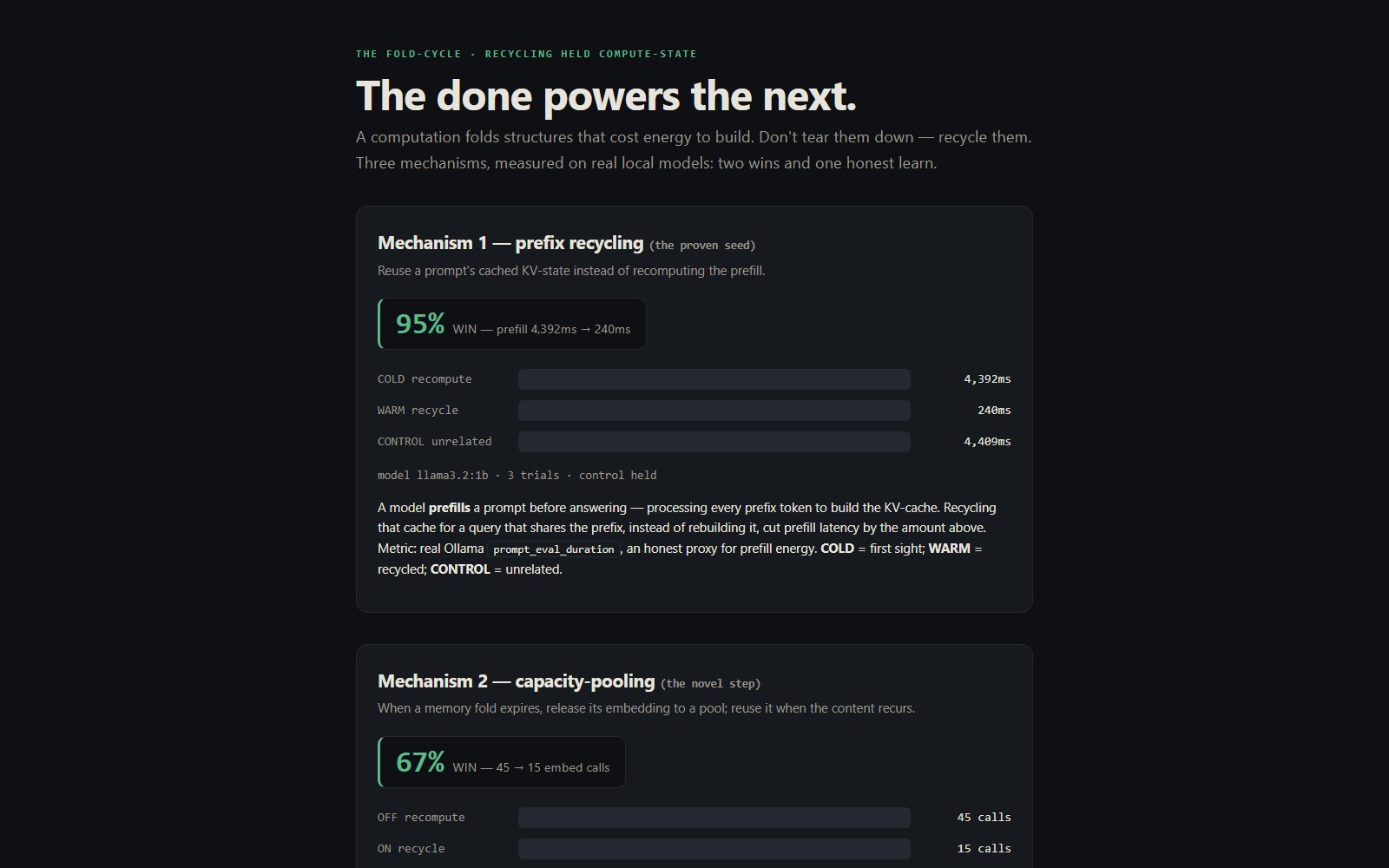
Fold-cycle — prefill latency cut~95%Measured (control 0%): kar-foldcycle results.json (WIN, savingPct 95, control 0) and results-mech2.json (WIN, callsSavedPct 67, control 0); results-mech3.json LEARN · live
Fold-cycle — embedding calls avoided~67%Measured (capacity-pooling). Balance condition: LEARN — a fixed cap is about as good
capability-router — addresses / gate127 addresses · 1.0 (22/22 mutants killed)Measured: capability-router README (witness CLEAN, score 1.0, 22/22) · live
The dispatcher — three honest states7 auto · 9 behind a human key · 8 to-doMeasured: counted from dispatch-plan.mjs POLICY (24 organs, 9 walled) and dispatch.mjs HANDLERS (7 safe handlers), 2026-09-28; the three states are shown live on the capability-router page
witness on someone else’s code (left-pad/left-pad)5 / 6 killed · 1 survivorMeasured: fall-federate witness-external.json, ranAt 2026-09-26. The published green suite does not pin one line — the witness gate found it.
Own vs rent~6–17× cheaper to own at high use — renting wins below itCited: Lenovo Press LP2368, “On-Premise vs Cloud: Generative AI Total Cost of Ownership (2026 Edition)”, 24 July 2026. At high utilisation, owning inference ran ~6× cheaper per million tokens than cloud GPU instances and ~17× cheaper than a hosted reasoning-model API; breakeven ~5.2 months against on-demand cloud. Below roughly 5 hours a day of use, renting can win.
Small models for agentic worksufficient, suitable, economicalCited: Belcak et al., NVIDIA Research, “Small Language Models are the Future of Agentic AI”, arXiv:2506.02153, June 2025. Small language models are “sufficiently powerful, inherently more suitable, and necessarily more economical for many invocations in agentic systems.”
Model collapsethe tails disappear firstCited: Shumailov et al., “The Curse of Recursion: Training on Generated Data Makes Models Forget”, arXiv:2305.17493 (Nature, 2024). Training on model-generated content causes irreversible defects “where tails of the original content distribution disappear.”
The estate1,700+ public repositoriesCounted: GitHub API, org sjgant80-hub, public repos counted 2026-09-28 (gh api --paginate). Repo count is the territory, not the product. Much of it is templated scaffold; the crown products are the handful of gated, live builds named here.

What's live, what needs a human, what's next

The honest state of the estate, the day this was made.

Live now

  • fallforgemint + the sizer
  • fall-os
  • capability-router
  • fall-federate /join
  • sovereign-foundry
  • forgegrowth
  • meshos
  • kar-foldcycle

Proven — needs a human

  • fall-federate across two different machines (needs a second human)
  • witness in one external team's CI (needs a willing maintainer)

Credits

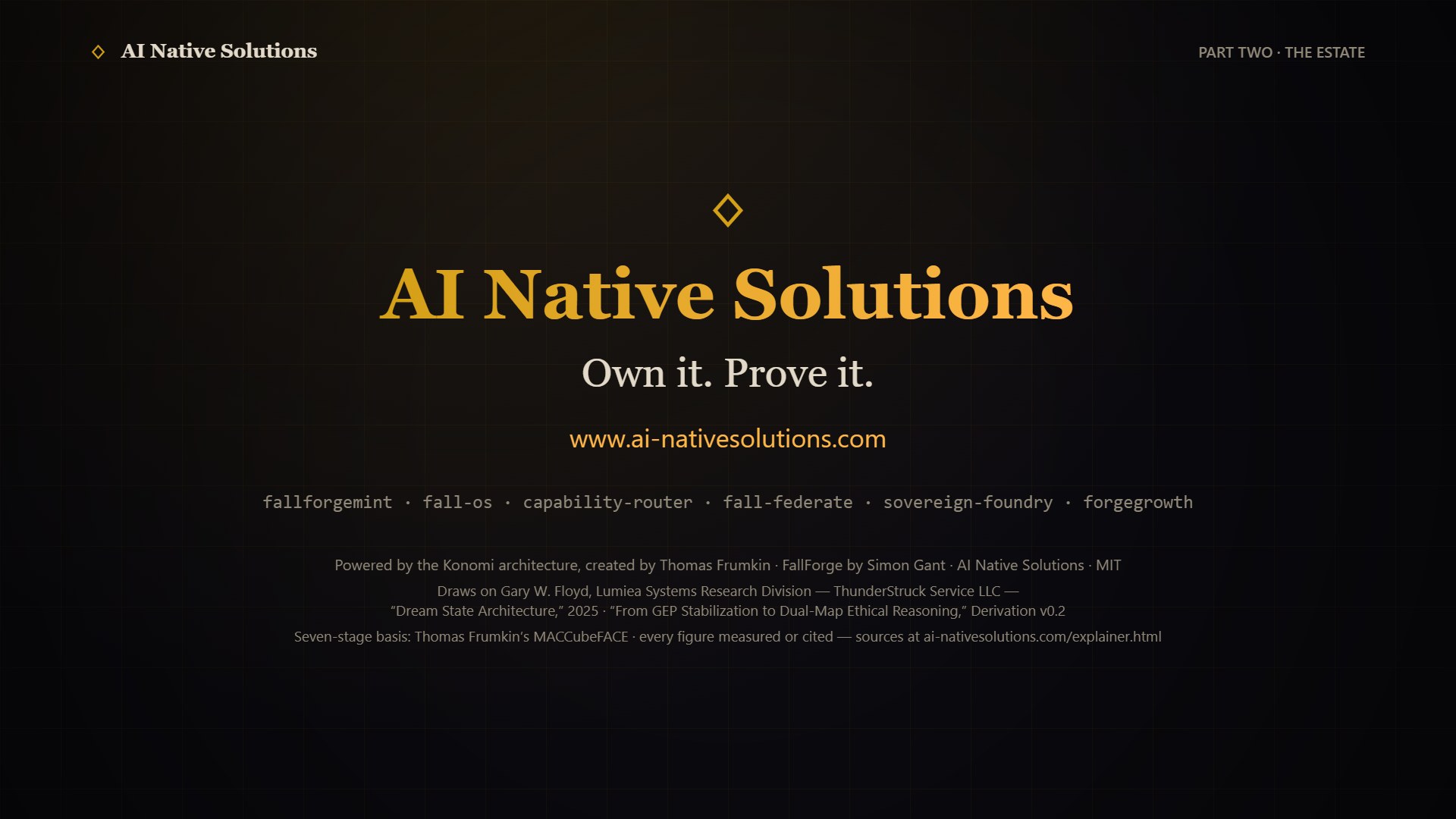
Powered by the Konomi architecture, created by Thomas Frumkin. The seven-stage, 127-address capability basis is Thomas Frumkin's MACCubeFACE. fall-os draws on Thomas Frumkin’s assos. The estate’s dream-state memory draws on Gary W. Floyd, Lumiea Systems Research Division — ThunderStruck Service LLC — “Dream State Architecture: GEP-Guided Memory Consolidation and Entropy Regulation in Artificial Consciousness Systems,” 2025; its Dual-Map decision gate draws on Gary W. Floyd, Lumiea Systems Research Division — ThunderStruck Service LLC — “From GEP Stabilization to Dual-Map Ethical Reasoning,” Derivation v0.2. FallForge by Simon Gant · AI Native Solutions. The film, the brochure and every build here are MIT-licensed; the cited works remain their authors’ own.